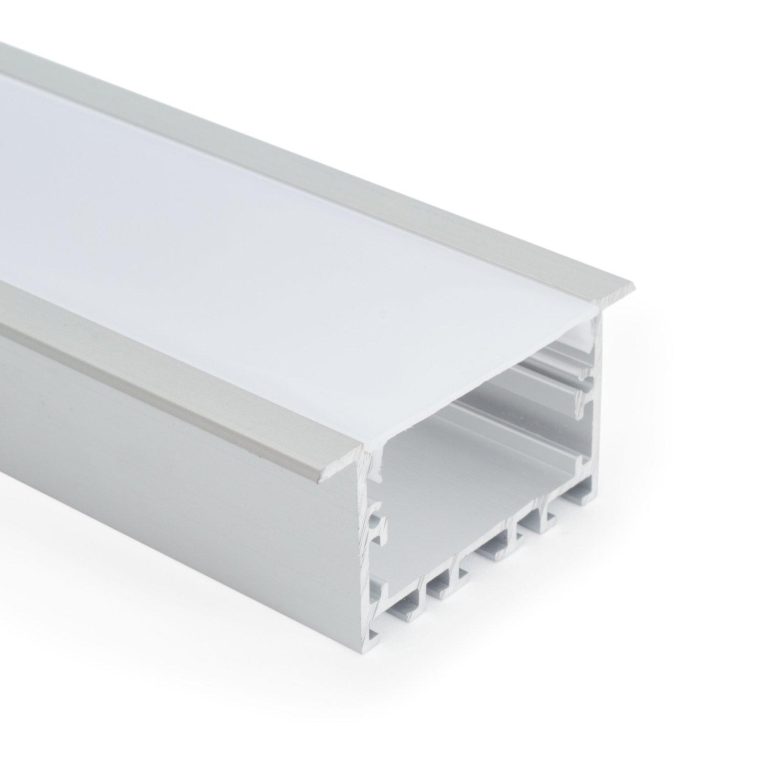
What Is a Linear Light Diffuser?
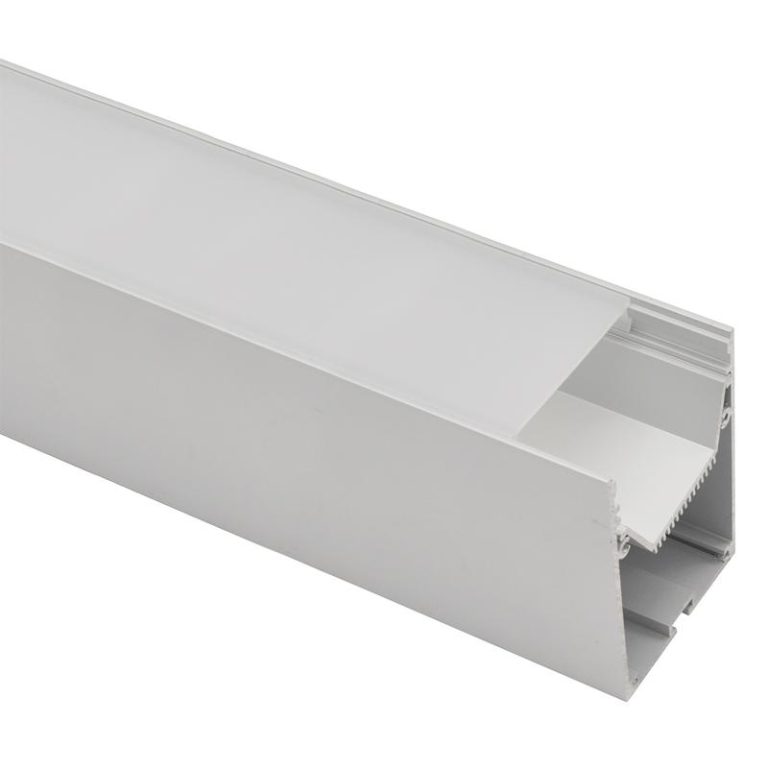
A Linear Light Diffuser is one of the most important components in modern linear LED lighting systems. It is designed to control, distribute, and soften the light emitted by LED sources while reducing visible LED hotspots and harsh glare.
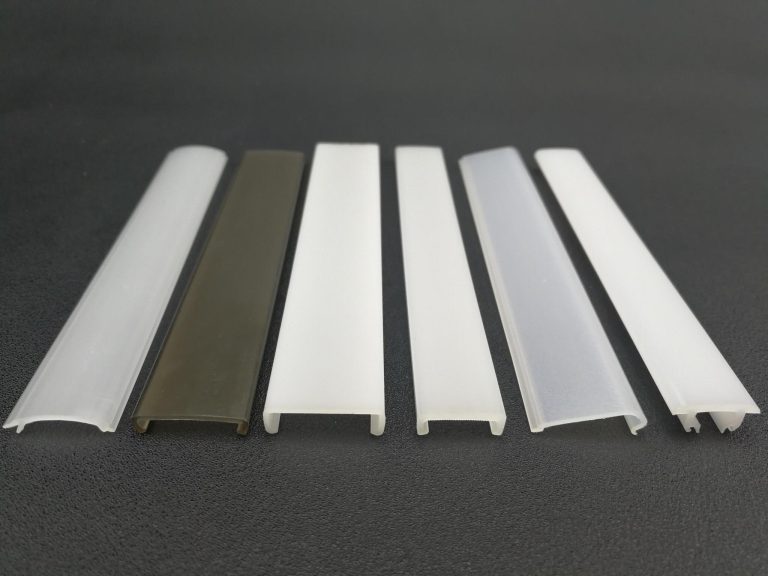
Linear light diffusers are commonly manufactured from optical-grade polycarbonate (PC) or acrylic (PMMA) using extrusion processes. Depending on the application, they can be produced in different levels of transparency, surface textures, colors, dimensions, and optical characteristics.
In professional lighting systems, selecting the right diffuser has a direct impact on light uniformity, visual comfort, appearance, durability, and the overall performance of the lighting fixture.
Why Is a Linear Light Diffuser Important?
LEDs are highly efficient light sources, but individual LED chips can create strong and concentrated points of light. When these points are directly visible, they can produce unwanted glare and visible hotspots.
A properly designed diffuser helps transform these concentrated light sources into a smoother and more uniform line of light.
1. Reducing Glare and Visible Hotspots
One of the main functions of a diffuser is to reduce the visibility of individual LED points.
The diffuser scatters the light and distributes it across its surface. This helps create a more continuous and uniform lighting effect.
Depending on the diffuser design, material, optical properties, and distance between the LED source and diffuser, different levels of diffusion can be achieved.
2. Improving Visual Comfort
Direct exposure to bright LED points can create visual discomfort, especially in offices, commercial spaces, architectural lighting, and other environments where people are exposed to lighting for long periods.
A suitable diffuser softens the light and helps reduce harsh brightness and visible LED points.
The result is a more comfortable and balanced lighting environment.
3. Improving the Appearance of Linear Lighting
A high-quality diffuser can transform a conventional LED strip or LED module into a clean, continuous line of light.
This is especially important in:
- Architectural lighting
- Interior design
- Decorative lighting
- Retail lighting
- Office lighting
- Commercial spaces
- Modern furniture lighting
The diffuser can also be manufactured in different finishes and colors to match the design requirements of the project.
4. Protecting Internal Components
The diffuser also acts as a physical cover for the LED source and internal components of the lighting profile.
Depending on the profile design, it can help protect the lighting system from:
- Dust
- Physical contact
- Minor mechanical impact
- Environmental exposure
For demanding applications, the material and profile design should be selected according to the required operating conditions.
5. Supporting Long-Term Performance
Choosing the correct diffuser material can contribute to the long-term performance of a lighting system.
Materials such as optical-grade polycarbonate can provide high impact resistance and good thermal performance, while acrylic can provide excellent optical clarity and surface appearance.
The final performance depends on the material formulation, extrusion process, operating temperature, UV exposure, LED power, and overall fixture design.
Types of Linear Light Diffusers by Material
Linear light diffusers are commonly manufactured from two main materials:
- Polycarbonate (PC)
- Acrylic (PMMA)
Each material has different optical, mechanical, and thermal properties.
1. Polycarbonate (PC) Diffuser
Polycarbonate (PC) is widely used for professional and industrial lighting applications because of its combination of optical performance, impact resistance, and durability.
Main advantages of PC:
- High impact resistance
- Good optical performance
- High mechanical strength
- Good dimensional stability
- Suitable for demanding applications
- Available with UV stabilizers
- Suitable for extrusion manufacturing
- Available in different optical finishes
Polycarbonate is often preferred for applications where mechanical durability and impact resistance are important.
It is suitable for:
- Industrial lighting
- Commercial lighting
- Architectural lighting
- Linear LED profiles
- Outdoor lighting applications
- Transportation lighting
- High-traffic environments
2. Acrylic (PMMA) Diffuser
Acrylic (PMMA) is another common material used for lighting diffusers.
PMMA is particularly valued for its excellent optical clarity, surface appearance, and light transmission.
Main advantages of PMMA:
- Excellent optical clarity
- High light transmission
- Good surface quality
- Attractive appearance
- Suitable for decorative lighting
- Good weathering performance when properly formulated
- Available in transparent and diffused grades
PMMA is commonly selected for applications where optical appearance and light transmission are major priorities.
Typical applications include:
- Decorative lighting
- Architectural lighting
- Retail lighting
- Interior lighting
- Display lighting
- Premium lighting fixtures
Types of Linear Light Diffusers by Surface Finish
The surface structure of a diffuser has a major effect on light distribution and the final appearance of the lighting system.
Different surface finishes can be produced according to the required optical performance.
1. Clear Diffuser
A Clear Diffuser provides high optical transparency and allows a large amount of light to pass through the material.
Characteristics:
- High transparency
- High light transmission
- Minimal diffusion
- Maximum light output
- Suitable for applications where LED visibility is acceptable
Clear profiles are often used when maximum optical efficiency and transparency are required.
2. Opal / Milky Diffuser
An Opal or Milky Diffuser provides a higher level of light diffusion.
It reduces the visibility of individual LED points and creates a softer and more uniform appearance.
Characteristics:
- Soft light distribution
- Reduced LED visibility
- Improved visual uniformity
- Attractive appearance
- Suitable for decorative and architectural lighting
Opal diffusers are among the most common solutions for linear LED lighting systems.
3. Prismatic / Textured Diffuser
A Prismatic or Textured Diffuser uses a structured surface to control the direction and distribution of light.
The surface pattern can help manage glare and improve light distribution.
Characteristics:
- Controlled light distribution
- Reduced glare
- Improved optical performance
- Decorative surface appearance
- Suitable for professional lighting applications
Prismatic surfaces are commonly used in offices, commercial spaces, architectural lighting, and technical lighting systems.
4. Micro-Prismatic Diffuser
A Micro-Prismatic Diffuser uses very fine optical structures to control the distribution of light.
Its microstructure can improve light control while maintaining high optical transmission.
Applications include:
- Offices
- Architectural lighting
- Commercial buildings
- Professional linear lighting
- High-quality indoor lighting systems
Micro-prismatic solutions are particularly useful when both optical efficiency and glare control are important.
Applications of Linear Light Diffusers
Linear light diffusers are used in a wide range of lighting systems.
Their applications include residential, commercial, industrial, architectural, decorative, and transportation lighting.
1. Office and Commercial Lighting
Linear diffusers are widely used in:
- Offices
- Conference rooms
- Shopping centers
- Hotels
- Restaurants
- Commercial buildings
They help create clean and uniform lighting while improving the visual appearance of the lighting fixture.
2. Industrial and Warehouse Lighting
Polycarbonate diffusers are particularly useful in industrial environments because of their mechanical strength and impact resistance.
Applications include:
- Factories
- Warehouses
- Production facilities
- Workshops
- Industrial corridors
- Technical spaces
3. Architectural Lighting
Linear lighting is an important element in modern architectural design.
Diffusers can be integrated into:
- Ceilings
- Walls
- Recessed profiles
- Suspended lighting
- Cove lighting
- Architectural details
- Facades
The result is a clean and continuous line of light that integrates with the architecture.
4. Decorative and Interior Lighting
Linear LED diffusers are widely used in interior design.
Typical applications include:
- Furniture lighting
- Cabinets
- Shelves
- Kitchens
- Bedrooms
- Living rooms
- Decorative ceilings
- Wall lighting
5. Retail and Display Lighting
Retail environments require controlled and attractive lighting.
Linear diffusers can be used for:
- Display shelves
- Store furniture
- Product showcases
- Commercial displays
- Signage
- Brand displays
The correct diffuser can create a smoother lighting effect and improve the visual presentation of products.
6. Smart Lighting Systems
Modern smart lighting systems often use linear LED profiles with diffusers.
These systems can include:
- Dimmable lighting
- Tunable white lighting
- RGB lighting
- RGBW lighting
- Sensor-controlled lighting
- Automated lighting systems
The diffuser helps create a consistent visual appearance across the entire lighting system.
7. Transportation Lighting
Specialized diffusers can also be used in transportation applications.
Potential applications include:
- Buses
- Trains
- Rail vehicles
- Automotive interiors
- Transportation facilities
For these applications, material selection must be based on the required mechanical, thermal, optical, and safety requirements.
8. Parking Areas and Public Spaces
Linear LED lighting with durable diffusers can be used in:
- Parking areas
- Corridors
- Public buildings
- Walkways
- Underground facilities
- Service areas
Polycarbonate is often considered when higher impact resistance is required.
Technical Specifications of Faradid Polymer Linear Light Diffusers
At Faradid Polymer, linear light diffusers can be manufactured according to project requirements using engineering-grade polymer materials and continuous extrusion technology.
The available specifications can include:
| Specification | Available Options |
|---|---|
| Material | Engineering-grade PC or PMMA |
| Manufacturing Process | Continuous extrusion |
| Surface Finish | Clear, Opal, Prismatic, Micro-Prismatic, Embossed |
| Light Transmission | Approximately 85–94%* |
| UV Protection | Available with UV stabilizers |
| PC Temperature Range | Approximately -40°C to +120°C* |
| PMMA Temperature Range | Up to approximately 80°C* |
| Impact Resistance | Very high for PC / moderate for PMMA |
| Flame Rating | UL94 V-0 to V-2 for applicable PC grades* |
| Density | Approximately 1.20 g/cm³ for PC |
| Length | Up to 6 meters |
| Thickness | Approximately 0.5–5 mm |
| Colors | Clear, Milky, Smoke, Gold, Custom Colors |
*Actual performance depends on the selected material grade, formulation, profile geometry, processing conditions, and application requirements. Technical values should be confirmed for the specific product and project.
Available Surface and Color Options
Faradid Polymer can manufacture diffuser profiles with different optical appearances according to project requirements.
Available options may include:
Clear
High-transparency profiles for applications where maximum light transmission is required.
Milky / Opal
Diffused profiles designed to soften the light and reduce the visibility of LED points.
Smoke
Dark translucent profiles for modern and decorative lighting applications.
Gold
Special-color profiles for decorative and premium lighting designs.
Custom Colors
Custom colors can be developed according to project requirements and material specifications.
How to Choose the Right Linear Light Diffuser
Choosing a diffuser should not be based only on appearance.
Several technical factors should be considered.
1. LED Type
The type and density of the LED source have a direct effect on diffuser selection.
High-density LED strips usually require a diffuser with appropriate optical diffusion to reduce visible hotspots.
2. Distance Between LED and Diffuser
The distance between the LED source and diffuser is one of the most important factors in achieving uniform illumination.
When the LED source is very close to the diffuser, a higher diffusion level or optimized optical surface may be required.
3. Required Light Transmission
If maximum brightness is the priority, a clear or high-transmission diffuser may be more suitable.
If uniformity and reduced LED visibility are more important, an opal, textured, or micro-prismatic diffuser may be a better option.
4. Operating Temperature
The operating temperature of the lighting system should be considered when selecting the material.
For high-temperature environments, the selected polymer grade must be suitable for the actual operating conditions.
5. UV Exposure
For outdoor or high-UV applications, a material grade with suitable UV stabilization should be considered.
6. Mechanical Requirements
If the diffuser is exposed to impact, vibration, frequent installation, or demanding industrial conditions, polycarbonate can be a suitable choice because of its high impact resistance.
7. Visual Appearance
The final appearance of the lighting system depends on:
- Material
- Transparency
- Haze
- Surface texture
- Profile geometry
- LED density
- LED-to-diffuser distance
- Color
Therefore, samples and optical testing can be useful before mass production.
Why Choose Faradid Polymer?
Engineering Expertise
Faradid Polymer combines specialized knowledge of polymer materials and extrusion technology to develop lighting diffuser profiles for different applications.
High-Quality Raw Materials
The selection of appropriate raw materials is an important part of producing stable and high-quality diffuser profiles.
Material selection can be adapted to the required optical, mechanical, thermal, and environmental properties.
Strict Quality Control
Quality control is applied throughout the manufacturing process to maintain consistency in:
- Dimensions
- Surface quality
- Color
- Transparency
- Optical performance
- Profile geometry
Custom Manufacturing
Every lighting project may require a different profile.
Faradid Polymer can manufacture custom diffuser profiles according to:
- Customer drawings
- Required dimensions
- Profile geometry
- Material
- Surface finish
- Color
- Thickness
- Length
- Optical requirements
Technical Support and After-Sales Service
Our team can support customers during the product selection and manufacturing process.
We can evaluate the application requirements and recommend a suitable material, surface finish, and production specification.
How to Order Linear Light Diffusers
To request a quotation or start a custom manufacturing project, provide the following information whenever available:
- Profile drawing or sample
- Required material: PC or PMMA
- Required dimensions
- Required length
- Surface finish
- Required color
- LED type
- LED density
- LED-to-diffuser distance
- Required quantity
- Application and operating environment
Providing accurate technical information helps us recommend a suitable solution and prepare a more accurate quotation.
Frequently Asked Questions
What is a Linear Light Diffuser?
A Linear Light Diffuser is a transparent or translucent polymer component installed over an LED light source to distribute and soften light, reduce visible hotspots, and create a more uniform lighting effect.
What materials are used to manufacture LED diffusers?
The two most common materials are polycarbonate (PC) and acrylic (PMMA).
The appropriate material depends on the optical, mechanical, thermal, environmental, and design requirements of the project.
Is polycarbonate better than acrylic for a light diffuser?
Not necessarily.
Each material has different advantages.
Polycarbonate is generally preferred when high impact resistance and mechanical durability are important.
PMMA is often preferred when high optical clarity, light transmission, and surface appearance are the main priorities.
The best material depends on the specific application.
What is an Opal Diffuser?
An Opal Diffuser is a translucent diffuser with a milky appearance.
It is designed to scatter light and reduce the visibility of individual LED points.
Opal diffusers are widely used in linear architectural, commercial, and decorative lighting.
What is a Prismatic Diffuser?
A Prismatic Diffuser has a structured optical surface that helps control the direction and distribution of light.
It can be used to improve light control and reduce glare in professional lighting applications.
Can Faradid Polymer manufacture custom diffuser profiles?
Yes.
Custom diffuser profiles can be manufactured according to technical drawings, samples, dimensions, materials, surface finishes, colors, and other project requirements.
What is the maximum production length?
Profiles can be manufactured in continuous extrusion and supplied in lengths of up to approximately 6 meters, depending on the product design and production requirements.
Can the color of the diffuser be customized?
Yes.
Depending on the material and production requirements, diffuser profiles can be manufactured in colors such as:
- Clear
- Milky
- Smoke
- Gold
- Custom colors
Can linear diffusers be used outdoors?
Yes, but the material and formulation must be selected according to the environmental conditions.
For outdoor applications, factors such as UV exposure, temperature, humidity, mechanical loads, and installation conditions should be considered.
What is the difference between Clear and Opal Diffusers?
A Clear Diffuser provides higher transparency and light transmission but generally offers less diffusion.
An Opal Diffuser provides greater light diffusion and reduces the visibility of LED points, creating a softer and more uniform appearance.
Final Summary
A Linear Light Diffuser is much more than a simple cover for an LED strip.
It is an important optical component that can influence the uniformity, appearance, visual comfort, and overall performance of a linear lighting system.
The right combination of:
- Material
- Light transmission
- Diffusion level
- Surface texture
- Profile geometry
- LED density
- LED-to-diffuser distance
- Operating temperature
- UV resistance
can significantly improve the final lighting result.
At Faradid Polymer, we provide custom extrusion solutions for linear lighting applications using polycarbonate (PC) and acrylic (PMMA).
From material selection and profile development to extrusion and final production, our goal is to provide reliable diffuser solutions that meet the technical and design requirements of each project.
For technical consultation, custom profile development, or quotation, contact the Faradid Polymer team.
Faradid Polymer — Custom Polymer Extrusion & Linear Light Diffuser Solutions
Phone: 09199700072
Email: faradidpolymer@gmail.com
No comments yet.