

Table of Contents
-
What Is a Thermal Break Window?
-
History and Applications
-
Components of a Thermal Break Window
-
Polymer Parts Applications
-
Thermal Break vs Standard Aluminum Windows
-
How Thermal Break Reduces Heat Transfer
-
Benefits of Thermal Break Windows
-
Polymer Parts Manufacturing by Extrusion
-
Summary Table of Components
-
Key Buying Tips
-
Conclusion
-
FAQ
1. What Is a Thermal Break Window?
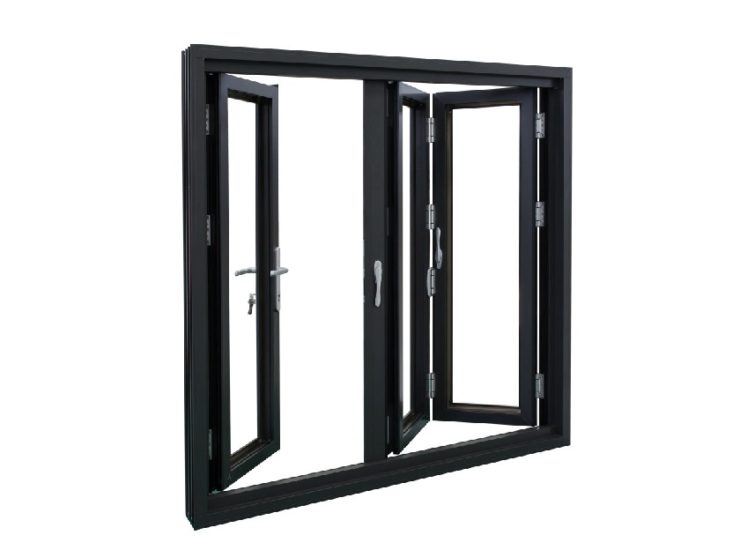
A thermal break window is one of the most advanced types of aluminum windows, in which an insulating polymer piece is placed between the inner and outer sections of the aluminum profile. This polymer piece — usually made of polyamide 6.6 reinforced with glass fibers (PA66 GF25) — cuts off the heat transfer path between the interior and exterior of the building.
The term Thermal Break refers to a “thermal separation” or “thermal cut.” In ordinary aluminum windows, aluminum metal — due to its very high thermal conductivity (around 205 W/m·K) — rapidly transfers heat and cold from outside to inside and vice versa. This phenomenon, known as a thermal bridge, leads to energy loss, increased cooling and heating costs, and condensation and freezing on the glass.
In a thermal break window, by placing a polyamide strip with very low thermal conductivity (around 0.3 W/m·K) between the two profile sections, the thermal bridge path is cut. The result of this intelligent design is a dramatic reduction in energy loss and increased occupant comfort.
1.1. The Concept of Thermal Break in Modern Architecture
In modern architecture, thermal break is recognized as a key solution for improving energy efficiency in buildings. According to international standards such as ASHRAE and EN ISO 10077, thermal break windows can reduce the heat transfer coefficient (U-value) by up to 50% compared to ordinary aluminum windows.
1.2. Thermal Break vs Other Window Types
| Window Type | U-value | Acoustic Insulation | Cost |
|---|---|---|---|
| Standard Aluminum | 5.8 W/m²K | Poor | Low |
| UPVC | 1.8 W/m²K | Good | Medium |
| Thermal Break | 1.4 W/m²K | Excellent | High |
| Wooden | 1.6 W/m²K | Good | High |
2. History and Applications
2.1. History
Thermal break technology was first introduced in the 1970s in European and North American countries following the energy crisis. With rising fossil fuel prices and growing attention to energy efficiency, engineers sought a solution to reduce heat loss from aluminum windows. In the 1980s, the use of polyamide strips as thermal insulation in aluminum windows became widespread, and new standards were defined.
2.2. Applications
Thermal break windows are widely used in:
-
Modern residential buildings: Apartments, villas, residential towers
-
Commercial buildings: Offices, shopping malls, hotels
-
Industrial buildings: Factories, warehouses
-
Special buildings: Hospitals, laboratories, clean rooms
-
Zero Energy Building (ZEB) projects
-
Cold climates: Regions with harsh winters
-
Hot climates: Regions with scorching summers
3. Components of a Thermal Break Window
A thermal break window consists of 7 main components, each with a specific function:
3.1. Aluminum Profile
The aluminum profile forms the main body of the thermal break window and is divided into two sections:
-
Inner profile: Facing the interior
-
Outer profile: Facing the exterior
Material: Alloy 6063 (magnesium + silicon)
Features:
-
Lightweight and high strength
-
Corrosion resistance
-
Anodizing and coloring capability
-
100% recyclable
Function: Supporting glass weight, providing structural strength, stability against wind and load
3.2. Polyamide Thermal Barrier
The polyamide thermal barrier is the most important component, responsible for cutting heat transfer between the inner and outer profiles.
Material: Polyamide 6.6 reinforced with 25% glass fibers (PA66 GF25)
Features:
-
Very low thermal conductivity (0.3 W/m·K)
-
High resistance to extreme temperatures (-40°C to +120°C)
-
Dimensional stability over time
-
Resistance to UV and corrosion
-
High mechanical strength
Function: Breaking the thermal bridge, preventing condensation and freezing, improving thermal insulation
3.3. Gasket
The gasket is an elastomeric piece placed between the glass and profile, as well as between the sash and frame.
Material: EPDM (ethylene propylene diene rubber) or silicone
Types:
-
Glass gasket: Between glass and profile
-
Seal gasket: Between sash and frame
-
Secondary gasket: For enhanced insulation
Function: Preventing air, water, and dust infiltration; improving acoustic and thermal insulation
3.4. Double Glazing
Thermal break windows use double or triple glazing.
Structure: Two or three glass layers + intermediate gas (argon or krypton) + spacer
Features:
-
Up to 50% reduction in energy loss
-
Up to 35 dB noise reduction
-
Prevents condensation and fogging
-
Compatible with Low-E coatings
Function: Thermal and acoustic insulation, reduced energy consumption
3.5. Hardware
Thermal break window hardware includes a set of metal and polymer parts.
Material: Stainless steel or anodized aluminum
Types:
-
Concealed hinge: For various opening types
-
Multi-point lock: For enhanced security
-
Handle: For opening and closing
-
Adjustment mechanism: For precise sash alignment
Function: Proper window operation, security, ease of use, long lifespan
3.6. Polymer Side Parts
In addition to the main polyamide barrier, polymer side parts are used:
-
Polymer corner connectors: For joining profile corners
-
End caps: For covering profile ends
-
Connecting parts: For joining different profile sections
-
Water drainage strips: For directing water outward
Material: PVC, polyamide, or ABS
Function: Completing window structure, improving waterproofing, increasing durability
3.7. Waterproofing Parts and Bead
The glass bead is a piece that holds the glass firmly in place.
Material: Rigid PVC or aluminum
Function: Securing the glass, preventing water infiltration, draining water from the profile
4. Polymer Parts Applications
Polymer parts play a key role in thermal break window performance:
4.1. Polyamide Barrier Role
-
Breaking the thermal bridge: Preventing heat and cold transfer
-
Increasing strength: Reinforcing profile structure
-
Preventing condensation: Reducing temperature difference
-
Resistance to stress: Withstanding thermal expansion and contraction
4.2. Side Parts Role
-
Waterproofing: Preventing rainwater infiltration
-
Structural completion: Filling empty spaces
-
Stabilization: Holding components in place
-
Aesthetics: Covering connection points
4.3. Bead and Waterproofing Role
-
Glass retention: Holding glass in place
-
Water drainage: Directing water out of the profile
-
Sealing: Preventing air and dust infiltration
5. Thermal Break vs Standard Aluminum Windows
| Feature | Standard Aluminum | Thermal Break |
|---|---|---|
| Structure | Monolithic | Two-piece with insulating strip |
| Thermal conductivity | High (205 W/m·K) | Low (0.3 W/m·K) |
| U-value | 5.8 W/m²K | 1.4 W/m²K |
| Thermal insulation | Poor | Excellent |
| Acoustic insulation | Poor | Excellent |
| Condensation/freezing | High | Nearly zero |
| Energy consumption | High | Low (up to 40% less) |
| Initial cost | Low | High |
| Return on investment | — | 3 to 5 years |
| Lifespan | 15–20 years | 20–30 years |
| Aesthetics | Standard | Modern and slim |
5.1. Thermal Performance Comparison
U-value is the main criterion for window thermal performance:
-
Standard aluminum window: U = 5.8 W/m²K
-
Thermal break with double glazing: U = 1.4 W/m²K
-
Thermal break with triple glazing and Low-E: U = 0.8 W/m²K
Lower U-value = Lower energy consumption = Lower costs
5.2. Acoustic Performance Comparison
-
Standard aluminum window: 25 dB
-
Thermal break with double glazing: 35 dB
-
Thermal break with triple glazing: 40 dB
5.3. Cost and ROI Comparison
Although the initial cost of thermal break windows is 30–50% higher than standard aluminum windows, given the energy savings:
-
Return on investment: 3 to 5 years
-
Annual savings: Up to 40% in cooling and heating costs
-
Property value increase: Up to 10%
6. How Thermal Break Reduces Heat Transfer
6.1. Physical Mechanism
Heat transfer in windows occurs through three methods:
-
Conduction: Heat transfer through direct contact
-
Convection: Heat transfer through air movement
-
Radiation: Heat transfer through electromagnetic waves
Thermal break primarily affects conduction and radiation:
-
Cutting conduction: The polyamide strip cuts the heat conduction path
-
Reducing radiation: Low-E coatings on glass reflect thermal radiation
6.2. The Role of Thermal Bridge
A thermal bridge is a path through which heat passes without obstruction. In ordinary aluminum windows, aluminum itself is a thermal bridge. By inserting the polyamide strip, this bridge is broken, and heat transfer is minimized.
6.3. The Role of Polyamide Insulation
The polyamide strip, with thermal conductivity 340 times lower than aluminum, acts as a thermal barrier. It also:
-
Resists thermal expansion and contraction
-
Prevents condensation and freezing
-
Extends profile lifespan
7. Benefits of Thermal Break Windows
7.1. Reduced Energy Consumption
-
Up to 40% reduction in cooling and heating energy
-
Reduced greenhouse gas emissions
-
Compliance with green building standards
7.2. Acoustic Insulation
-
Up to 40 dB noise reduction
-
Suitable for noisy areas
-
Increased occupant comfort and focus
7.3. Condensation and Freezing Prevention
-
No fogging on glass
-
No freezing in winter
-
Prevention of mold and mildew growth
7.4. Extended Building Lifespan
-
Reduced moisture and water infiltration
-
Corrosion prevention
-
Increased structural durability
7.5. Modern Aesthetics
-
Slim and elegant profile
-
Custom design options
-
Diverse color options
7.6. Eco-Friendly
-
100% recyclable aluminum
-
Reduced fossil fuel consumption
-
Environmental sustainability
7.7. Increased Property Value
-
Greater buyer appeal
-
Higher resale price
-
Reduced maintenance costs
8. Polymer Parts Manufacturing by Extrusion
8.1. Extrusion Process
Extrusion is one of the most important polymer parts manufacturing methods. The process:
-
Raw material: Polymer granules enter the hopper
-
Melting: Granules melt in the heated cylinder
-
Extrusion: Melt passes through the die
-
Cooling: Output profile cools in water bath
-
Drawing: Profile is drawn to desired size
-
Cutting: Profile is cut to specified lengths
8.2. Raw Materials
-
Polyamide 6.6 (PA66): For thermal barrier
-
Polyamide + glass fibers (PA66 GF25): For reinforcement
-
PVC: For side parts
-
ABS: For connecting parts
8.3. Quality Control
-
Dimensional control: Precise measurement
-
Thermal control: Thermal conductivity testing
-
Mechanical control: Strength testing
-
Visual control: Surface inspection
9. Summary Table of Components
| Component | Material | Main Function | Performance Role |
|---|---|---|---|
| Aluminum Profile | Alloy 6063 | Structural strength | Load bearing |
| Polyamide Barrier | PA66 GF25 | Breaking thermal bridge | Thermal insulation |
| Gasket | EPDM / Silicone | Sealing | Preventing air infiltration |
| Double Glazing | Glass + Argon | Insulation | Reducing energy loss |
| Hardware | Stainless Steel / Aluminum | Operation | Security and ease of use |
| Polymer Side Parts | PVC / Polyamide | Waterproofing | Structural completion |
| Bead & Waterproofing | PVC / Aluminum | Retention | Holding glass |
10. Key Buying Tips
10.1. Check the U-value
-
U ≤ 1.4 W/m²K: Excellent
-
U = 1.4–2.0: Good
-
U ≥ 2.0: Poor
10.2. Polyamide Barrier Material
-
PA66 GF25: Best option
-
PA66: Good
-
Reinforced PVC: Acceptable
10.3. Glass Type
-
Double glazing + Argon: Standard
-
Triple glazing + Low-E: Advanced
-
Simple double glazing: Economical
10.4. Hardware
-
Stainless steel: Best
-
Anodized aluminum: Good
-
Simple aluminum: Economical
10.5. Warranty and After-Sales Service
-
Profile warranty: At least 10 years
-
Hardware warranty: At least 5 years
-
Glass warranty: At least 10 years
11. Conclusion
A thermal break window is a modern, efficient, and sustainable solution for thermal and acoustic insulation in buildings. Using a polyamide barrier, double glazing, EPDM gaskets, and high-quality hardware, these windows deliver outstanding performance in reducing energy consumption and increasing occupant comfort.
Although the initial cost of thermal break windows is higher than standard aluminum windows, given the 3 to 5-year return on investment and long-term benefits, it is a smart investment.
Faradid Polymer, as one of the leaders in manufacturing thermal break window polymer parts in Iran, is ready to provide consultation, design, and custom part production. Contact our expert team for more information and orders.
12. FAQ
1. What is the most important component of a thermal break window?
The polyamide thermal barrier is the most important component, responsible for breaking the thermal bridge.
2. What material is the polyamide barrier made of?
It is typically made of PA66 GF25 (polyamide 6.6 reinforced with 25% glass fibers).
3. Are thermal break windows also acoustically insulated?
Yes, with double glazing and proper gaskets, acoustic insulation of up to 40 dB can be achieved.
4. What is the lifespan of a thermal break window?
With proper maintenance, the lifespan is typically 20 to 30 years.
5. Are thermal break window polymer parts replaceable?
Yes, many parts such as gaskets and hardware are replaceable, and the polyamide barrier can also be repaired if damaged.
6. What is the difference between thermal break and UPVC windows?
UPVC windows use PVC profiles, while thermal break uses aluminum + polyamide strip. Thermal break offers greater strength and a more modern appearance.
7. Are thermal break windows useful in hot climates?
Yes, thermal break reduces energy consumption for both cooling and heating in both cold and hot climates.
8. How much do thermal break windows cost?
Prices vary based on dimensions, glass type, hardware material, and profile brand. Contact us for an exact quote.
9. Are thermal break windows recyclable?
Yes, aluminum is 100% recyclable, and polyamide is also mechanically recyclable.
10. What is the difference between thermal break and thermal bridge?
They are opposite concepts; thermal break cuts the heat path, while thermal bridge is the heat path itself.
🔗 Internal Links
-
Thermal Break Window Polymer Parts — Main product page
No comments yet.