

What Are Polymer Components for Thermal Break Windows?
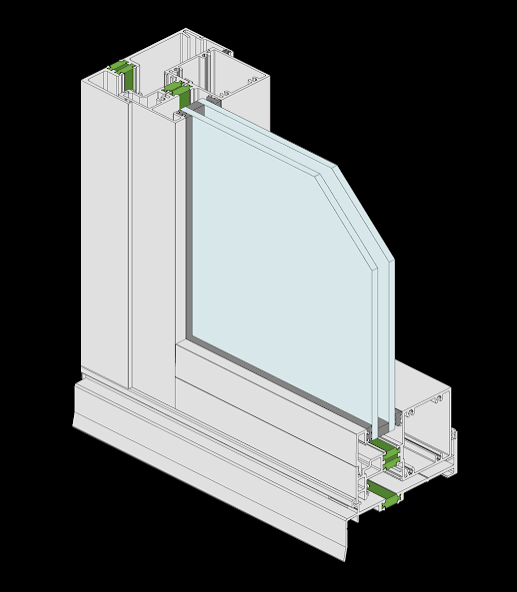
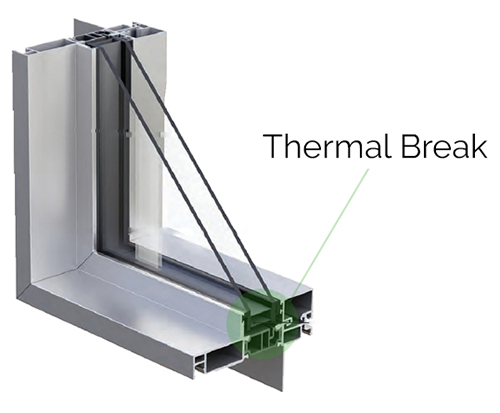
Polymer components for thermal break windows are engineered parts placed between the interior and exterior sections of aluminum profiles to interrupt the thermal bridge and prevent rapid heat and cold transfer between inside and outside. These components are the beating heart of a thermal break system — without them, aluminum windows cannot achieve effective thermal performance.
A thermal break window without polymer insulating parts is just a standard aluminum window that conducts heat rapidly. But when these polymer parts are engineered with precision and installed correctly, the aluminum profile becomes an efficient thermal insulator.
Why Are Polymer Components Used in Thermal Break Windows?
Aluminum, as a metal, has a very high thermal conductivity. If a window is made entirely of aluminum, heat transfers from inside to outside in winter, and from outside to inside in summer. This phenomenon, called a thermal bridge, causes energy loss, condensation on profiles, and reduced thermal comfort.
Polymers, unlike metals, have a very low thermal conductivity. That’s why placing a polymer piece between two aluminum halves interrupts the heat transfer path. This polymer part must simultaneously have several key properties: high thermal resistance, sufficient mechanical strength, resistance to moisture and UV, dimensional stability, and strong bonding to the aluminum profile.
Types of Polymer Components for Thermal Break Windows
1. Main Thermal Break (Polyamide Strip): The most important polymer component, placed as a strip between two aluminum profiles. Typically made of glass-fiber-reinforced polyamide PA66, offering a combination of strength and insulation.
2. Side Polymer Profiles: Parts used at corners and connection points of the profile, serving both structural and insulation roles.
3. Polymer Seals and Gaskets: EPDM, TPE, or PVC gaskets installed at glass-to-profile contact points and sash closing points, preventing air, water, and sound infiltration.
4. Hardware Insulating Parts: Small polymer components placed between metal hardware and the aluminum profile to prevent new thermal bridges.
5. Supplementary and Decorative Profiles: Polymer parts used to complete the window’s appearance, cover joints, or add decorative details.
Polymer vs. Metal Components in Thermal Break Windows
| Feature | Metal Parts (Aluminum) | Polymer Parts (PA66) |
|---|---|---|
| Thermal Conductivity | Very High | Very Low |
| Thermal Insulation | None | Excellent |
| Mechanical Strength | High | Good to High |
| Corrosion Resistance | Moderate | Excellent |
| Weight | Heavy | Light |
| Performance in Thermal Break | Unsuitable | Ideal |
Benefits of Polymer Components for Thermal Break Windows
-
Reduced heat transfer and lower heating/cooling energy consumption
-
Prevention of condensation and dew on interior profile surfaces
-
Improved thermal comfort near the window
-
Reduced sound transmission and urban noise pollution
-
Extended lifespan of the profile and building
-
Preserved sleek, modern aluminum appearance
-
Environmentally friendly with reduced greenhouse gas emissions
Applications of Polymer Components for Thermal Break Windows
-
Modern residential buildings focused on energy efficiency
-
Office and commercial towers with glass facades
-
Hotels and hospitality centers for guest comfort
-
Hospitals and medical centers requiring temperature and sound control
-
Industrial buildings needing thermal insulation
-
Green and energy-efficient projects meeting energy standards
-
Soundproof windows in high-traffic urban areas
Manufacturing Process of Polymer Components
These components are typically produced using the polymer profile extrusion method:
-
Preparation of polymer raw materials (PA66, PVC, or polyurethane granules)
-
Melting materials in an extruder
-
Passing the polymer melt through a die with a specific cross-section
-
Cooling and reaching final dimensions
-
Cutting, packaging, and quality control
This process enables mass production with high dimensional accuracy and reasonable cost. Custom polymer parts manufacturing with dimensions and specifications tailored to the client’s needs is also available.
Why Order from Faradid Polymer?
-
Premium Raw Materials: PA66 with glass fiber for high durability and thermal performance
-
High Dimensional Accuracy: Perfect fit with your aluminum profile
-
Full Customization: Production based on your dimensions, cross-section, and color
-
Continuous Quality Control: Consistent quality at every production stage
-
Technical Support: Expert consultation for choosing the best component
-
Fast Delivery: Production scheduling aligned with your project timeline
🟦 Order now from Faradid Polymer — Visit the Faradid Polymer homepage to explore all products and services.
Order and Request a Quote
For technical consultation, price inquiry, and ordering polymer components for thermal break windows, contact our experts. Our technical team is ready to review your project requirements and provide the right solution.
FAQ
What are polymer components for thermal break windows?
They are parts placed between the interior and exterior sections of aluminum profiles to interrupt the thermal bridge and reduce heat transfer.
What material are these components usually made of?
Glass-fiber-reinforced polyamide PA66 is the most common material.
Is custom manufacturing possible?
Yes. Custom polymer parts with dimensions and specifications tailored to the client’s needs are available.
What is the minimum order quantity?
For minimum order and cooperation terms, please contact our experts.
No comments yet.