

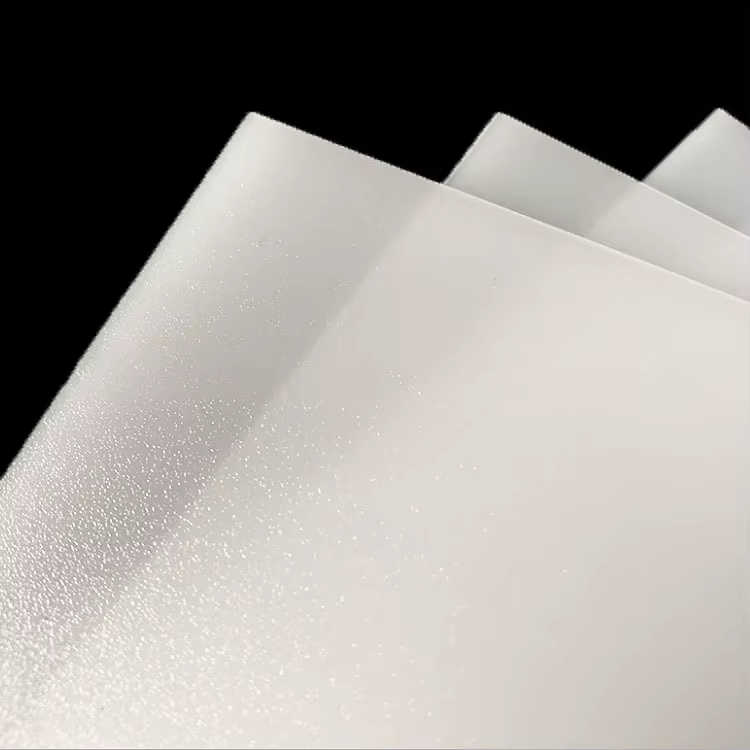
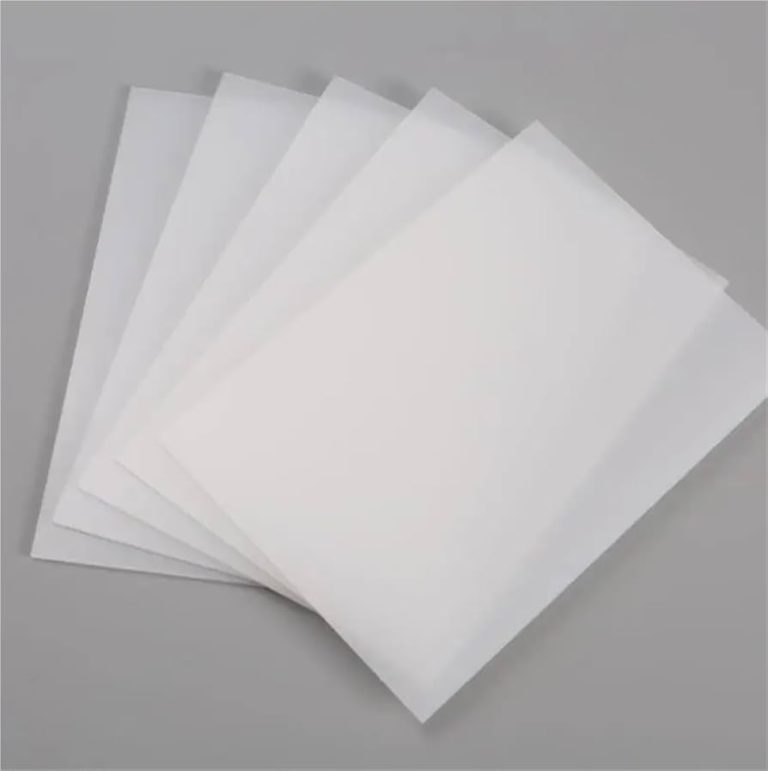
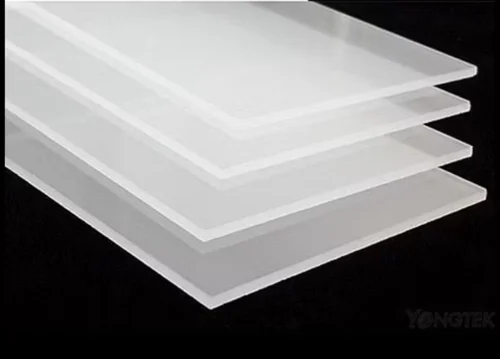
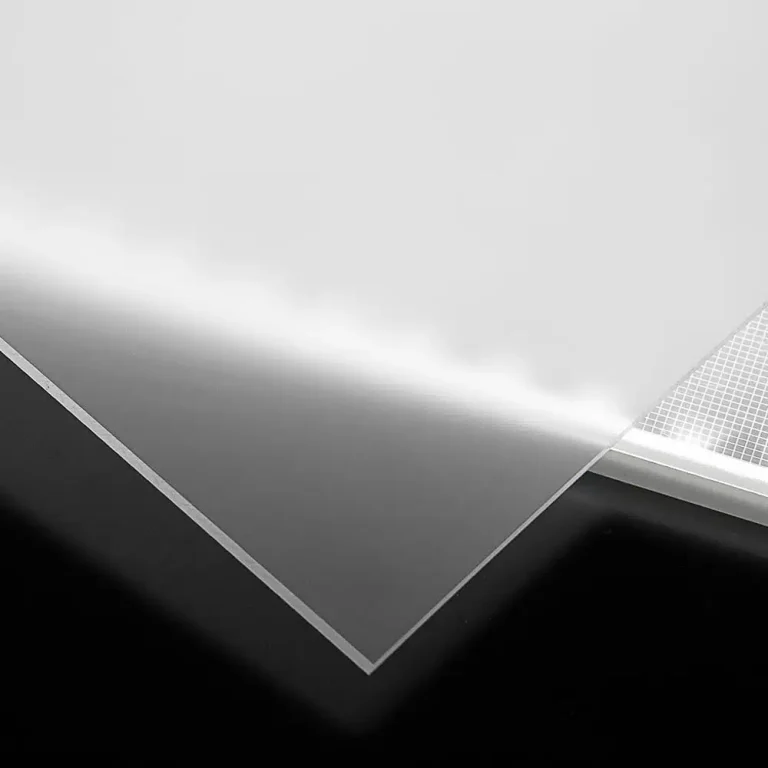
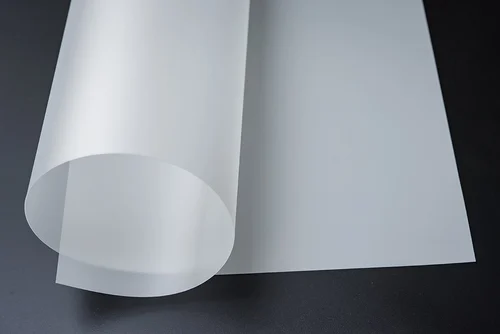
What is a Transparent Acrylic (PMMA) Diffuser?
A transparent acrylic (PMMA – Polymethyl Methacrylate) diffuser—also known as acrylic, Plexiglas, or Orgala—is one of the best and most widely used polymer materials for manufacturing lighting diffusers with the highest level of optical clarity. This product is produced using advanced extrusion technology and premium-grade PMMA engineering polymer, serving as a cover and light distributor in high-quality LED lights, architectural lighting, display showcases, and luxury lighting systems.
The transparent acrylic diffuser, with light transmission exceeding 92% and clarity close to glass, is one of the best options for applications where maximum brightness and visual quality are paramount. In addition to providing uniform light distribution, this product eliminates glare and hot spots, delivering a superior visual experience for users.
Advantages of Using Transparent Acrylic (PMMA) Diffusers
1. Highest Clarity and Light Transmission
The acrylic diffuser offers light transmission of 92–94%, making it one of the clearest polymers available on the market. This feature makes it an ideal choice for lights requiring maximum brightness and minimum light loss. Compared to glass, PMMA is much lighter while offering comparable clarity.
2. Excellent UV Resistance and Yellowing Prevention
One of the most important advantages of acrylic diffusers is their high resistance to UV radiation. Unlike some other polymers that turn yellow and lose clarity when exposed to sunlight, PMMA—with specialized stabilizers—maintains its clarity and visual quality for years. This characteristic is critical for outdoor applications, architectural lighting, and high-exposure environments.
3. Superior Appearance with Smooth, Glossy Surface
Acrylic diffusers produced via extrusion feature a smooth, glossy, defect-free surface. This aesthetic quality makes them ideal for applications where product visibility matters, such as retail showcases, luxury lighting, and decorative luminaires.
4. Good Chemical Resistance
Acrylic offers good resistance to many chemicals, including dilute acids, bases, and non-polar solvents. This property makes it suitable for industrial and laboratory environments where contact with chemicals is possible.
5. Light Weight and Easy Installation
The specific gravity of PMMA is approximately 1.19 g/cm³, roughly half that of glass. This light weight makes handling, installation, and transportation of acrylic diffusers much easier, significantly reducing shipping and installation costs.
6. Customizability in Various Sizes and Thicknesses
Transparent acrylic diffusers can be manufactured in custom lengths up to 6 meters, thicknesses from 0.5 to 5 mm, and with smooth, matte, patterned, or corrugated surfaces. This flexibility allows lighting manufacturers to order diffusers precisely tailored to their product designs.
Differences Between Acrylic (PMMA) and Polycarbonate (PC) Diffusers
A common question in the lighting industry concerns the differences between these two materials. Below is a comprehensive comparison:
| Feature | Acrylic (PMMA) Diffuser | Polycarbonate (PC) Diffuser |
|---|---|---|
| Light Transmission | 92–94% (highest) | 88–92% |
| Clarity | Very high, near glass | High, but slightly bluish |
| Impact Resistance | Moderate | Very high (~10× PMMA) |
| Heat Resistance | Up to 80°C | Up to 130°C |
| UV Resistance | Excellent (with stabilizers) | Good (with stabilizers) |
| Chemical Resistance | Good | Good |
| Price | Economical | Higher than PMMA |
| Primary Applications | Luxury lighting, showcases, architecture | Industrial environments, impact-prone areas |
| Specific Gravity | ~1.19 g/cm³ | ~1.20 g/cm³ |
Applications of Transparent Acrylic Diffusers
Thanks to their high clarity and excellent aesthetics, transparent acrylic diffusers are used across a wide range of industries and products:
| Application Area | Description |
|---|---|
| Linear Luxury Lighting | Management offices, hotels, modern commercial spaces |
| Architectural Lighting | Building facades, bridges, urban spaces |
| Showcases & Store Shelving | Attractive product display with uniform, clear lighting |
| Decorative & Interior Lighting | Villas, restaurants, cafés, artistic spaces |
| Light Boxes | Advertising signs, wayfinding, and urban signage |
| Smart Lighting Systems | Dimmable lights with lighting control technology |
| Medical & Laboratory Equipment | Protective covers and light diffusers in sensitive equipment |
| Automotive Interiors | Cabin lighting, instrument panels, and interior trim |
Technical Specifications of Faradid Polymer Transparent Acrylic (PMMA) Diffuser
| Specification | Value / Description |
|---|---|
| Scientific Name | Polymethyl Methacrylate |
| Chemical Formula | (C₅O₂H₈)ₙ |
| Production Process | Continuous Extrusion |
| Appearance | Linear, flat, U-shaped, trapezoidal, custom |
| Surface Type | Clear glossy, matte (opal), embossed |
| Light Transmission | 92–94% (highest among polymers) |
| Refractive Index | 1.49 |
| UV Resistance | Excellent (with specialized stabilizers) |
| Glass Transition Temp (Tg) | ~105°C |
| Max Continuous Use Temp | 80°C |
| Density | ~1.19 g/cm³ |
| Impact Resistance (Izod) | Moderate (~20 J/m) |
| Elongation at Break | ~5% |
| Modulus of Elasticity | ~3.3 GPa |
| Recyclability | Yes (mechanically recyclable) |
| Production Length | Up to 6 meters (cuttable to size) |
| Thickness | 0.5 to 5 mm (customizable) |
| Available Colors | Transparent, matte white, smoked, custom colors |
Factors Affecting the Price of Transparent Acrylic Diffusers
The price of transparent acrylic diffusers is influenced by several factors:
1. Quality and Brand of Raw Materials – Using top-grade European or Asian raw materials with high purity affects the final price. Faradid Polymer uses the finest PMMA grades available.
2. Thickness and Dimensions – Greater thickness and longer lengths mean more material and higher production costs, thus a higher price.
3. Surface Type (smooth, matte, patterned) – Producing patterned or matte surfaces requires more specialized molds and complex processing, which can increase cost.
4. Order Quantity – High-volume orders typically benefit from lower overhead costs and thus more economical pricing.
5. Special Additives – If specific additives like enhanced UV stabilizers, anti-scratch coatings, or custom colors are required, the final price will increase.
Why Choose Faradid Polymer’s Transparent Acrylic Diffuser?
1. Engineering Expertise & Industry Experience
Backed by years of specialized experience in polymer extrusion, Faradid Polymer produces diffusers that rank at the highest level in optical quality, durability, and dimensional precision.
2. Premium Raw Materials
All Faradid Polymer acrylic diffusers are made from top-grade, high-purity raw materials using specialized masterbatches, ensuring consistent quality, color uniformity, and clarity across all production batches.
3. Rigorous Quality Control at Every Stage
From raw material selection and mold design through extrusion, dimensional control, optical inspection, and packaging—every step is monitored by Faradid Polymer’s quality control team.
4. Custom and Tailored Production Capabilities
If standard products don’t meet your needs, Faradid Polymer’s engineering team is ready to design and produce custom acrylic diffusers based on your drawings, samples, or initial concepts.
5. Quality Warranty and After-Sales Support
Faradid Polymer offers a quality warranty on all products, giving customers confidence in the durability, performance, and quality of every diffuser.
How to Order and Purchase Transparent Acrylic Diffusers
To purchase transparent acrylic diffusers, simply contact the Faradid Polymer sales and support team via:
Phone: +98 9199700072
Email: info@faradidpolymer.com
Contact Form: Via the “Contact Us” section on the website
Once your requirements are received—including:
-
Dimensions (length, width, thickness)
-
Surface type (smooth, matte, patterned)
-
Required clarity and light transmission
-
Order quantity
-
Final application
Faradid Polymer’s technical team will recommend the best option in terms of polymer type, formulation, and profile design, and schedule production and delivery accordingly.
Frequently Asked Questions About Transparent Acrylic (PMMA) Diffusers
1. Is acrylic diffuser impact-resistant?
Acrylic diffusers offer better impact resistance than glass, but less than polycarbonate. For high-impact environments, polycarbonate is a better choice.
2. Is acrylic diffuser UV-resistant?
Yes, Faradid Polymer’s acrylic diffusers are manufactured with UV stabilizers and are resistant to yellowing and degradation from sunlight.
3. Is acrylic diffuser recyclable?
Yes, PMMA is mechanically recyclable. Faradid Polymer, as a responsible company, strives to minimize waste and adopt circular economy approaches in production.
4. Does the acrylic diffuser maintain its clarity over time?
Yes, with proper UV stabilizers, the acrylic diffuser maintains its clarity for years without yellowing or clouding.
5. How is the price of a transparent acrylic diffuser calculated?
The final price depends on factors such as raw material type, thickness, length, order quantity, and surface type. For an exact quote, please contact the Faradid Polymer sales team.
Final Summary
The transparent acrylic (PMMA) diffuser is one of the best and most advanced options for manufacturing LED lights with top-tier optical quality, unmatched clarity, and aesthetic appeal. Faradid Polymer, leveraging engineering knowledge, industrial experience, and a commitment to quality, produces diffusers that not only meet the technical and optical requirements of your projects but also create genuine added value for your business.
If you are looking for a reliable and professional supplier of transparent acrylic diffusers, the Faradid Polymer team is ready to assist you at every stage—from technical consultation and design to production and delivery—providing the best solutions tailored to your project needs.
Faradid Polymer—Where Engineering Shapes the Future.
No comments yet.